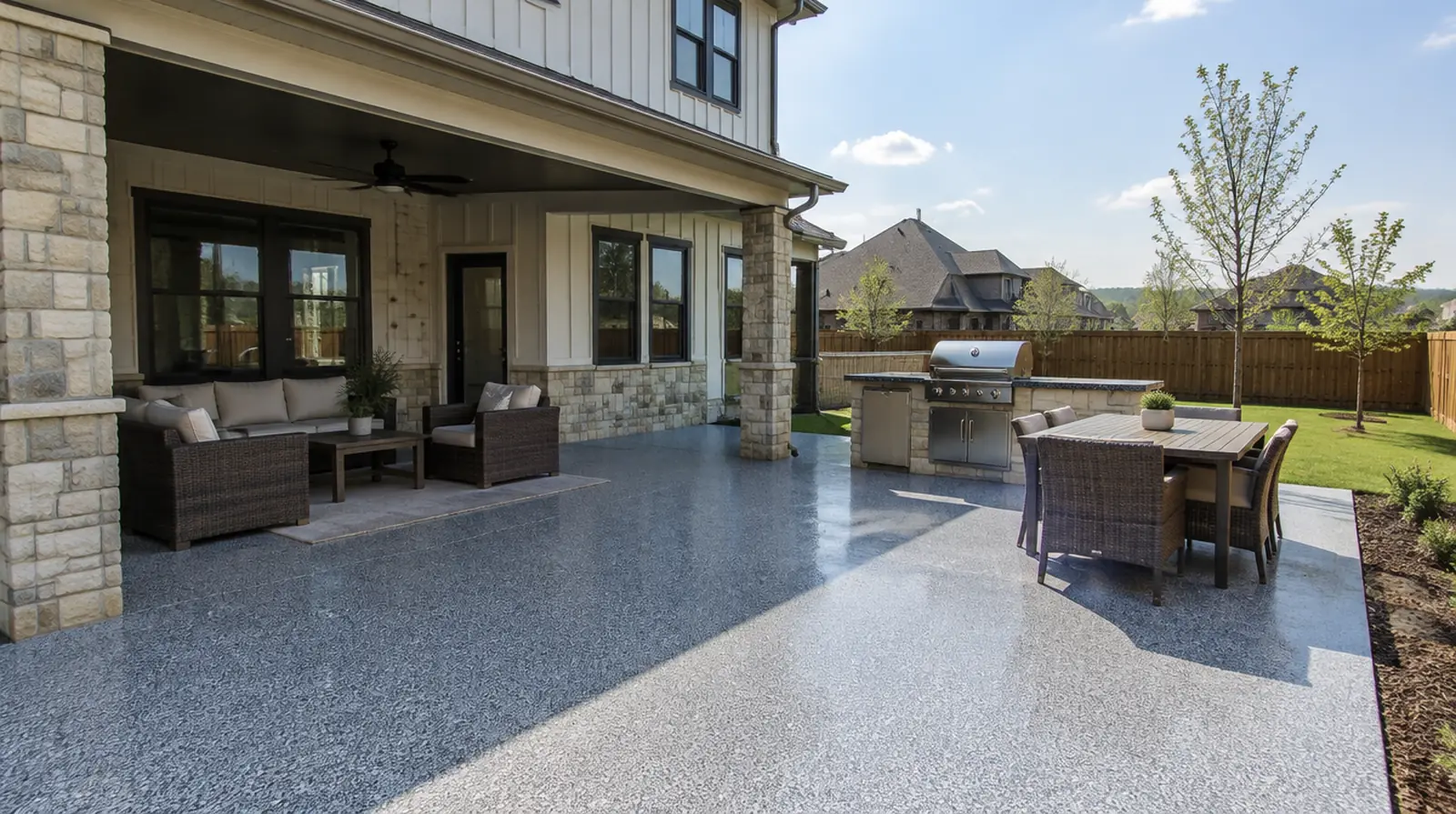
Patios that grew over time
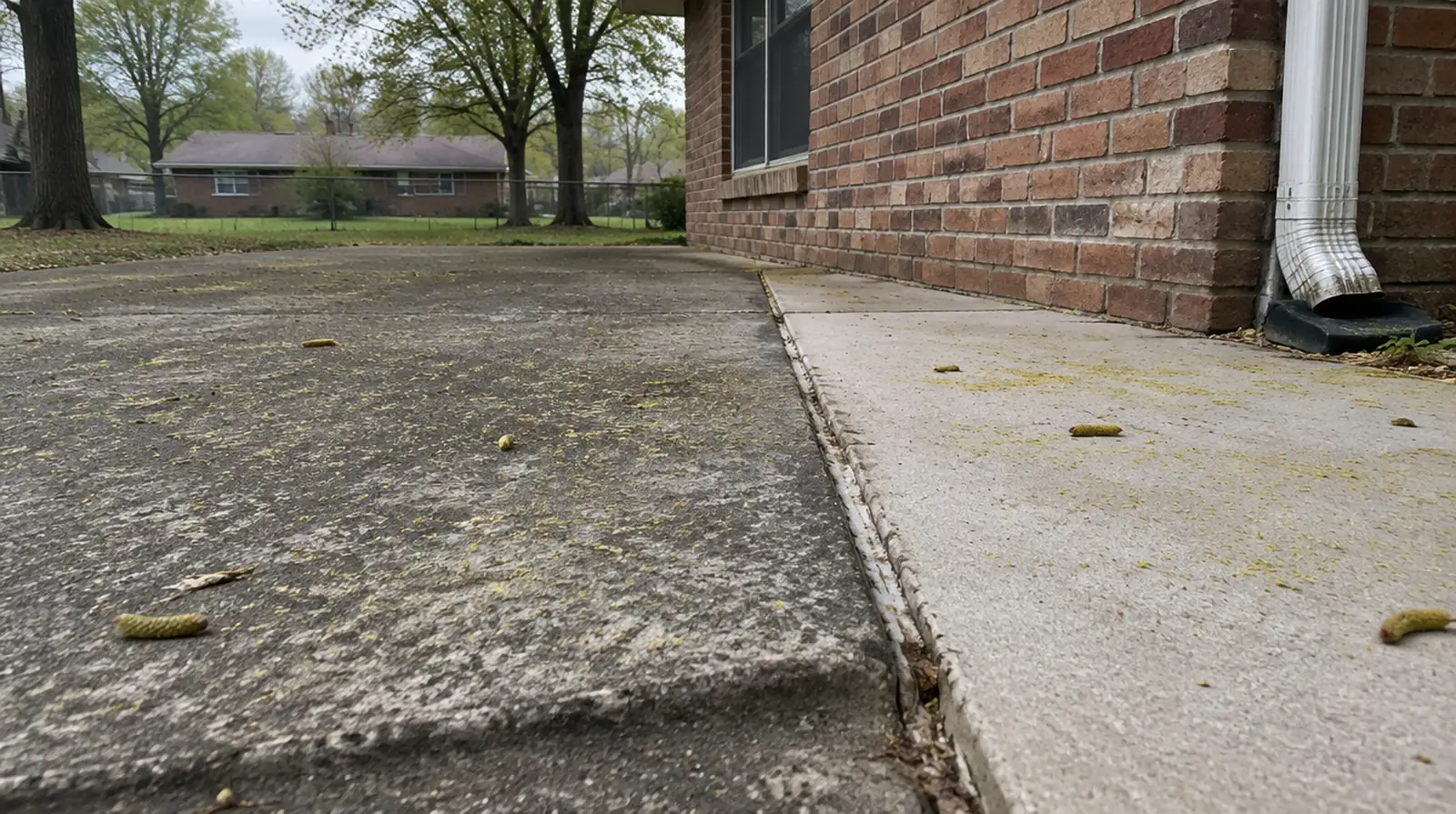
Springdale has grown fast for decades, and the backyards show it. Many homes in the subdivisions toward Tontitown, Elm Springs and the Har-Ber area came with a small covered slab off the back door. Owners later added an extension, a hot tub pad or a grill area. Older brick ranches closer to downtown often have a slab that has been patched, painted and re-patched. The result is concrete in two or three different colors, uneven seams and stains that will not wash out.
A patio coating covers all of it with one continuous finish. It seals the concrete against spills, leaves, pollen and mildew, and it adds a slip-resistant texture that is easier on the feet than a rough broom finish.
Joining old and new concrete
The seam where a new pour meets the original slab is usually the trickiest spot. If one side sits a little higher, we grind the edge flush before coating. The joint itself is treated like a control joint: we either fill it with a flexible material and coat over it, or keep it as a clean line so the two slabs can move separately. We talk through which makes sense before we start, because the two slabs often move a little differently with the seasons.
Ozark seasons on a patio
Spring brings heavy rain and a thick coat of tree pollen that leaves a yellow film on everything. On bare concrete, pollen and rain stain. On a coated patio, they rinse off.
Summer is hot and humid. Shady corners stay damp and grow mildew, and open slabs get hot in the afternoon sun. Light flake blends stay cooler, and the polyaspartic topcoat we use outside resists UV instead of yellowing like indoor epoxy.
Fall is leaf season. Oak leaves left on bare concrete leave brown prints. Sealed concrete does not hold them.
Winter brings freezes and the occasional ice storm. A textured coating gives better footing than slick bare concrete, though nothing is truly safe on ice. If you use ice melt, choose one labeled safe for concrete.
The coating process
- Grind the whole slab with vacuum dust control to remove paint, sealer, stains and the weak top layer.
- Level the seams, fill cracks and rebuild chipped edges and step noses.
- Apply a base coat and broadcast colored vinyl flake to full coverage.
- Scrape off loose flake and roll on a UV-stable polyaspartic topcoat with anti-slip grit.
Most patios are done in one day, walkable the next and ready for furniture after a day or two. We schedule around rain, since the slab has to be dry.
Screened porches and outdoor kitchens
Screened porches are a good fit for coatings because they stay dry and protected. We tape off screen frames and door thresholds and coat right up to the walls. For outdoor kitchens, we coat around built-in islands and add extra topcoat where cooking spills land. Keep any wood-burning fire pit on a stone or metal base rather than directly on the coating.
Other outdoor services
Want it all to match? Our driveway coating can use the same flake. For pools, see pool deck coating, and for a clear coat without color, concrete sealing.
Common patio questions
Can you coat around a hot tub that sits on the patio?
Yes, if the tub can be moved or the pad is separate. Otherwise we coat neatly around its base.
Will a coating fix a patio that is sloping toward the house?
No. A coating follows the shape of the slab. If water is running toward the house, the slab needs to be corrected first, and we will tell you.
Do you work in Lowell, Johnson and Cave Springs?
Yes, and across the rest of northwest Arkansas.
Get your patio priced
Call (479) 334-0044. Tell us the rough size and whether part of it is covered, and we will come measure.